

Introduction
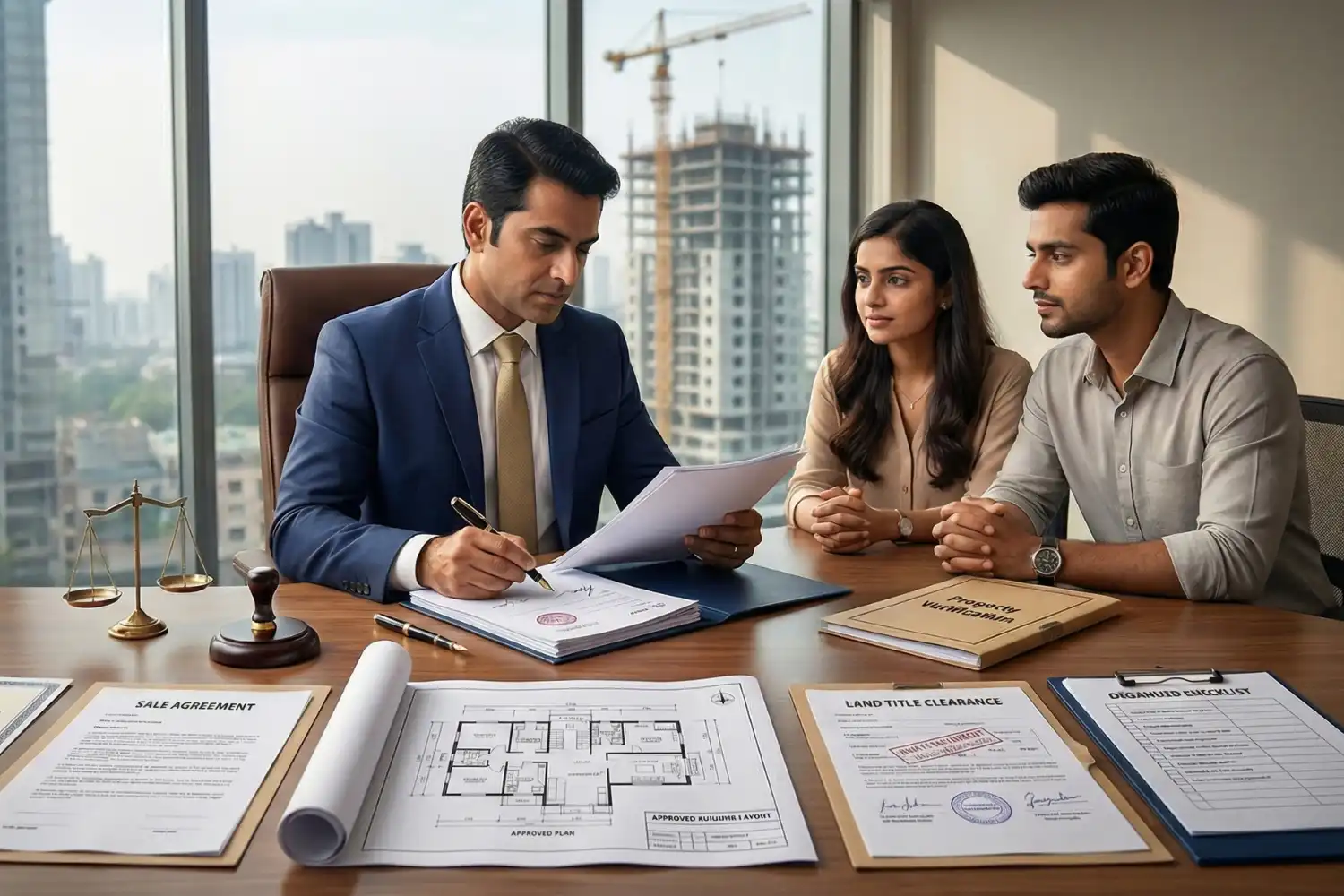
Buying Flat in New Construction India project requires careful legal verification of multiple documents. Proper documentation ensures legal security, financial safety, and timely possession. This guide explains the complete list of documents homebuyers must verify before purchasing a newly constructed flat in India.
In India, purchasing property is not just a financial transaction it is a legal transfer of ownership rights. Whether you are buying in Mumbai, Pune, Delhi, Bangalore, Hyderabad, or any Tier-2 city, the legal framework remains similar under central and state property laws, RERA regulations, municipal laws, and stamp registration rules.
If even one critical document is missing, incomplete, or improperly executed, it can lead to:
- Title disputes
- Project delays
- Loan rejection
- Demolition notices
- Penalties under municipal laws
- Difficulty in resale
This detailed legal checklist helps homebuyers understand how many documents are required for Buying Flat in New Construction India and why each document matters.
I Title & Land Documents
Title verification is the foundation of property title verification in India. Without a clear and marketable title, no project is legally safe.
• Sale Deed / Conveyance Deed
This proves ownership of the land. The developer must show how the land was acquired and whether it is legally transferable.
• Development Agreement (if developer is not landowner)
If the builder is developing land owned by another party, a registered development agreement must exist granting legal development rights.
• Registered Power of Attorney (if applicable)
If someone is signing documents on behalf of the landowner or developer, a valid registered Power of Attorney is mandatory.
• Property Card / 7/12 Extract
These revenue records confirm land ownership and land classification. This is essential for property title verification in India.
• Non-Agricultural (NA) Order
If the land was originally agricultural, it must be legally converted for residential use.
• 30-Year Title Search Report
A professional advocate conducts this search to verify that the property has a clear title for the past 30 years with no encumbrances.
Why Title Documents Matter
Title defects can result in:
- Stay orders on construction
- Litigation by third parties
- Cancellation of sale deeds
- Inability to secure home loans
For this reason, legal documents for buying a flat in India must always begin with land verification.
II. Government & Municipal Approvals
Even if the title is clear, construction must be legally approved.
• Approved Building Plan
Sanctioned by the municipal corporation. It confirms legal layout, FSI usage, number of floors, and amenities.
• Commencement Certificate (CC)
Construction cannot begin without this certificate.
• Intimation of Disapproval (IOD)
Issued before commencement certificate in many states. It lists compliance conditions.
• Environmental Clearance (if applicable)
Mandatory for large projects under environmental laws.
• Fire NOC
Required to confirm fire safety compliance.
Why Municipal Approvals Are Critical
Buying in a project without approvals may result in:
- Demolition of illegal floors
- Refusal of Occupation Certificate
- Bank loan rejection
- Disconnection of water/electricity
Always verify these approvals in your new construction flat documents checklist.
III. RERA Documents
Under the Real Estate (Regulation and Development) Act, 2016, RERA documents for homebuyers are mandatory for most projects.
• RERA Registration Certificate
Every eligible project must be registered under RERA.
• Project Details Published on RERA Website
Buyers should verify:
- Project completion date
- Carpet area
- Layout plan
- Litigation details
- Developer track record
• Escrow Account Compliance Details
Developers must deposit 70% of funds into a dedicated account to prevent fund diversion.
Importance of RERA Compliance
RERA protects buyers by:
- Imposing penalties for delay
- Providing refund rights
- Ensuring transparency
- Regulating advertisements
Ignoring RERA registration status is a major legal mistake.
IV. Construction & Completion Documents
These documents are crucial before taking possession.
• Occupation Certificate (OC)
This confirms that construction complies with approved plans and is safe for occupancy.
• Completion Certificate
Issued after construction is completed as per sanctioned plan.
• Structural Stability Certificate
Ensures building safety and structural integrity.
• Lift & Safety Approvals
Mandatory for high-rise projects.
Why Occupation Certificate Requirement Is Non-Negotiable
Taking possession without an OC can lead to:
- No water connection
- No electricity
- Heavy penalties
- Inability to form society
- Difficulty in resale
The occupation certificate requirement is one of the most important compliance checks.
V. Buyer-Specific Documents
These documents directly affect your ownership rights.
• Allotment Letter
Confirms unit allocation and payment schedule.
• Registered Agreement for Sale
This must be registered and stamped. Agreement for sale verification ensures that:
- Carpet area is correctly mentioned
- Payment terms are clear
- Possession date is fixed
- Penalty clauses are included
• Payment Receipts & GST Invoices
Always maintain documentation of payments.
• Home Loan Sanction Letter (if applicable)
Confirms bank approval and loan terms.
• Possession Letter
Issued when the flat is ready for possession.
• Society Formation Documents (post completion)
After project completion, society must be formed and conveyance executed.
Common Legal Mistakes to Avoid
• Booking without verifying title documents
• Signing unregistered agreements
• Paying large token amounts without documentation
• Taking possession without Occupation Certificate
• Ignoring RERA registration status
Additional risks include:
- Not checking carpet area vs super built-up area
- Not reviewing termination clauses
- Ignoring delay compensation clauses
- Not verifying GST compliance
How Many Documents Are Required for Buying a Flat in New Construction?
Typically, 20–25 essential documents must be verified across:
- Land title
- Municipal approvals
- RERA compliance
- Construction compliance
- Buyer agreements
The exact number may vary based on project size and state regulations.
Legal Due Diligence Process
A professional property lawyer typically:
- Conducts 30-year title search
- Verifies RERA registration
- Checks approvals and sanctions
- Reviews agreement for sale
- Examines payment schedule
- Confirms occupation certificate
This ensures safe legal documents for buying a flat in India.
Conclusion
Purchasing a new construction flat is a significant financial and legal decision. Verifying approximately 20–25 essential documents ensures clear ownership, regulatory compliance, and protection against future disputes. Always consult a property lawyer for professional due diligence before signing any agreement.
For professional assistance in property title verification in India, agreement for sale verification, and complete legal due diligence, visit: Vivs
FAQs – Documents Required for Buying Flat in New Construction India
1. How many documents are required for buying a flat in new construction?
Typically, 20–25 documents including title, approvals, RERA registration, agreement for sale, and occupation certificate must be verified.
2. What are the most important legal documents for buying a flat in India?
Sale deed, approved building plan, RERA certificate, registered agreement for sale, and occupation certificate are critical.
3. Is RERA registration mandatory for all projects?
Most residential projects above a certain size must be registered. Always verify on the official RERA website.
4. Why is property title verification in India necessary?
It ensures the seller has legal ownership and prevents future disputes.
5. Can I take possession without an Occupation Certificate?
It is legally risky. Utilities may be denied and penalties imposed.
6. What is agreement for sale verification?
It involves checking carpet area, possession timeline, payment terms, and penalty clauses before registration.
7. Are banks responsible for verifying project legality?
Banks conduct basic checks, but buyers should conduct independent legal verification.
8. What happens if the project is not RERA registered?
The project may be illegal or in violation of regulations, exposing buyers to risk.
9. Why is a 30-year title search report important?
It confirms that no legal disputes or encumbrances exist in the chain of ownership.
10. Should I consult a property lawyer before booking?
Yes. Legal due diligence before booking prevents financial and legal complications later.
