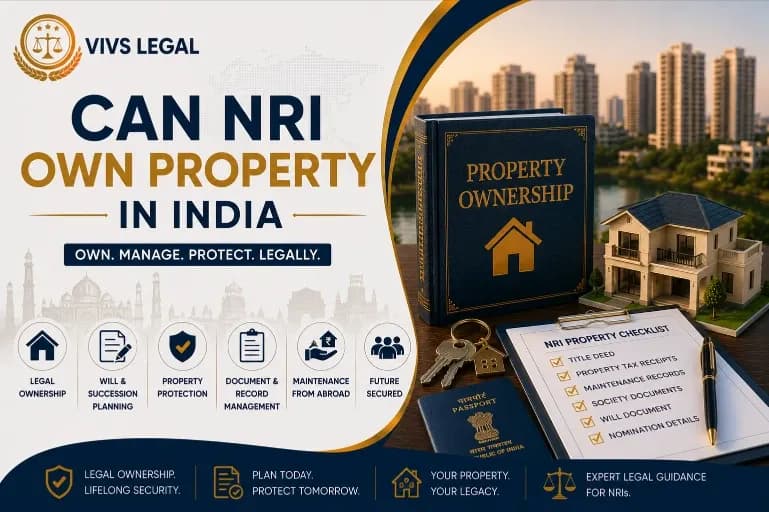
Yes, an NRI can own residential and commercial property in India with the same ownership rights as a resident, without any limit on the number of properties held. What deserves more attention than the ownership question itself is how title is structured and what happens to the property on the owner’s death, since these are where problems tend to surface for NRI-owned property specifically.
How title is typically held
An NRI can hold property individually, or jointly with another NRI, an OCI cardholder, or a resident Indian. The sale deed should record ownership exactly as intended, since correcting a title record after the fact is far more difficult, and often more expensive, than getting it right at registration.
Why succession planning matters more for NRI-owned property
Property owned by an NRI can involve succession across two legal systems if the NRI also holds assets or dies in another country, which can complicate probate and inheritance considerably compared to a straightforward domestic succession. A clear will, specifically covering the Indian property and consistent with any will made in the country of residence, avoids conflicting claims and lengthy delays for the heirs.
Maintaining the property from abroad
Ownership from a distance raises practical questions around property tax payments, maintenance, and tenancy management if the property is let out. Many NRI owners use a Power of Attorney holder for these ongoing tasks, distinct from the one used at the time of purchase, and this should be structured with the same care and clearly defined scope.
Records worth keeping as an NRI property owner
- The registered sale deed and all title documents from the original purchase.
- Property tax payment receipts, updated annually.
- A current will specifically addressing the Indian property.
- Records of any funds received as rental income, relevant for tax filing.
Should property be held individually or jointly?
Joint ownership with a spouse or another family member simplifies succession in some respects, since a surviving joint owner typically has a more straightforward path to full ownership than an heir inheriting from a sole owner. It also introduces its own complications, particularly if the relationship between co-owners changes over time or if one co-owner needs to sell their share independently. There is no universally correct answer, and the right structure depends on your specific family circumstances and long-term plans for the property.
Nomination versus a will: understanding the difference
Some cooperative housing societies allow a nominee to be registered for a flat, but nomination is not the same as inheritance under law. A nominee typically holds the property temporarily on behalf of the actual legal heirs determined by the will or succession law, rather than becoming the outright owner simply by being named nominee. Relying on nomination alone, without a proper will, is a common misunderstanding that can create disputes among heirs later.
Property tax and municipal compliance as an absentee owner
Property tax in India is typically due annually or in instalments depending on the municipal authority, and non-payment can accrue penalties and, in some cases, complicate future transactions involving the property. Setting up a reliable payment mechanism, whether through a local representative, standing instructions, or an online payment system where the municipal authority offers one, avoids the property quietly accumulating unpaid dues while you are unaware of the issue from abroad.
Frequently asked questions
Can an NRI own multiple properties in India?
Yes, there is no limit on the number of residential or commercial properties an NRI can own in India. The limit that applies is on repatriation of sale proceeds when a residential property is eventually sold, which is capped at not more than two such properties over the NRI’s lifetime.
Why is a separate will needed for property owned in India?
A will specifically addressing Indian property, consistent with any will made abroad, avoids conflicting claims and reduces delays for heirs navigating succession across two legal systems. Without this clarity, probate for Indian assets can take considerably longer and become more contested than it needs to be.
How does an NRI manage property maintenance from abroad?
Most NRI owners appoint a Power of Attorney holder for ongoing tasks like property tax payment and tenancy management, separate from any POA used at the time of purchase. This should be scoped clearly and reviewed periodically, rather than left open-ended indefinitely.
What records should an NRI keep as a property owner in India?
The registered sale deed, annual property tax receipts, a current will addressing the Indian property specifically, and records of any rental income received. These matter for tax filing, for any future sale, and for a smooth succession process for the eventual heirs.
Is it better for an NRI to own property jointly or individually?
There is no universally correct answer. Joint ownership can simplify succession for a surviving co-owner but introduces its own complications if the relationship between owners changes. The right structure depends on your specific family circumstances and long-term plans, and should be discussed with an advocate before the purchase.
Is a society nominee the same as the legal owner after death?
No, this is a common misunderstanding. A nominee typically holds the property temporarily on behalf of the actual legal heirs determined by a will or succession law, rather than becoming the outright owner simply by being named nominee. A proper will is still needed alongside any society nomination.
How does an NRI stay current on property tax from abroad?
Set up a reliable payment mechanism, whether through a local representative, standing instructions, or an online municipal payment system where available. Unpaid property tax can accrue penalties and complicate future transactions, so this should not be left to chance while you are managing the property from a distance.
Should an NRI’s will covering Indian property be registered?
Registration of a will is not mandatory in India but is generally advisable, since it adds a layer of authenticity that can reduce disputes among heirs later. This should be discussed with your advocate alongside the broader question of how the will is drafted and where copies are kept.
Plan for What Happens Next, Not Just the Purchase
Owning property in India as an NRI is straightforward on paper, but the practical realities of managing it from a distance, and eventually passing it on, deserve the same attention as the purchase itself. A little planning at the ownership stage saves considerable difficulty for whoever inherits later.
Need a Will Covering Your Indian Property?
VIVS Legal advises NRI clients on property title structuring, succession planning, and Power of Attorney arrangements.
Get a Free Legal ConsultationVIVS Legal advises NRI clients on property title structuring, succession planning, and Power of Attorney arrangements. Read more in our NRI legal services.
Written by Adv. Swanand Pandit, BLS, LL.B, LL.M, Advocate, High Court of Bombay, Director, VIVS Legal. Last updated 15 August 2026.