Discover carefully evaluated  real estate opportunities  and  structured investment products  designed to help investors make informed decisions.  Visit us

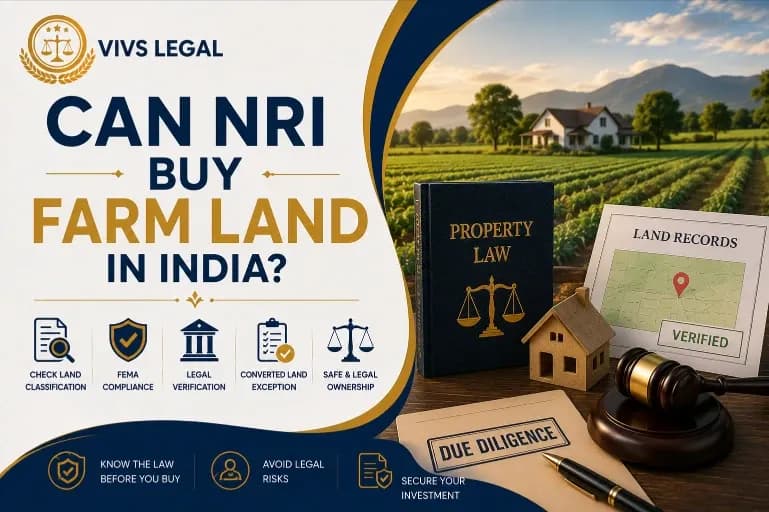
An NRI cannot purchase agricultural land directly, but can lawfully acquire it through inheritance, and in narrower circumstances through gift from an eligible resident relative. These two routes work very differently, and confusing them is where most disputes and delays start. This guide walks through both.

Inheritance: the unrestricted route

An NRI or OCI can inherit agricultural land, plantation property, or a farmhouse from any person, whether resident in India or a person resident outside India who had lawfully acquired the property under the rules in force at that time. No RBI approval is needed for this transfer. What matters practically is that the inheritance itself is properly documented, whether through a will, succession certificate, or the applicable intestate succession law, so that the mutation of land records into the NRI’s name is not delayed or disputed later.

Gift: the route that needs real care

Whether an NRI can receive agricultural land as a gift is a genuinely nuanced area, and published guidance is not entirely consistent. The general position is that the donor needs to be a resident Indian for the gift to be treated as valid under FEMA, and the specific relationship and circumstances of the gift should be verified carefully before the transfer is executed, rather than assumed to be automatically permitted simply because it is a gift between family members. A gift deed for agricultural land involving an NRI recipient should not be executed without confirming this position first.

What proper documentation actually involves

  • For inheritance: the will or succession certificate, the death certificate of the previous owner, and the application for mutation of land records in the NRI’s name.
  • For gift: a properly executed and registered gift deed, clear confirmation of the donor’s residential status, and stamp duty paid according to the applicable state rules.
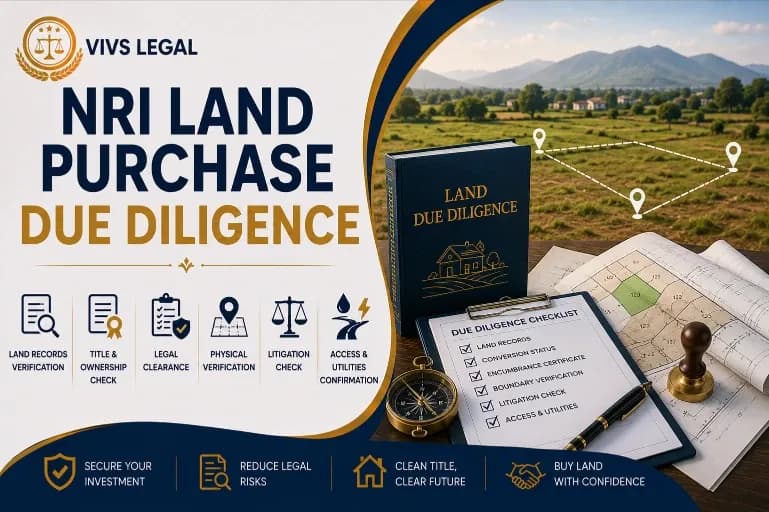
  • In both cases: an updated encumbrance certificate and confirmation that the land’s classification and boundaries match the official records before any further dealing with the property.

What this does not change

Inheriting or receiving agricultural land does not convert it into a general-purpose asset an NRI can freely trade or develop. Selling inherited agricultural land, or converting its use, involves its own separate rules. For the full prohibition this exception sits inside, see our overview on agricultural land rules for NRIs.

Handling agricultural land you have inherited but do not intend to farm

Many NRIs who inherit agricultural land have no intention of farming it themselves and instead lease it to a local farmer or leave it managed by a family member. This is generally permissible, but the lease terms and management arrangement should be properly documented, since informal arrangements around agricultural land are a recurring source of dispute, particularly over time as the person managing the land may come to assert claims beyond what was originally intended.

Multiple heirs and undivided agricultural land

Where agricultural land is inherited jointly by multiple heirs, some of whom may be NRIs and others resident in India, the land often remains undivided for years, sometimes managed informally by whichever heir is locally present. Formalising a partition, or at minimum a clear written agreement on management responsibilities and any income sharing, protects all heirs and avoids disputes escalating as circumstances change over time.

Converting inherited agricultural land for other use

An NRI who inherits agricultural land and wishes to convert it to residential or commercial use needs to go through the same formal state conversion process that would apply to any agricultural land, regardless of how the land was acquired. Inheritance does not simplify or bypass this conversion requirement, and attempting to develop or sell inherited agricultural land as though it were already converted, without completing this process, creates the same legal risk as an unauthorised purchase would.

Frequently asked questions

Does an NRI need RBI approval to inherit agricultural land?

No. Inheritance of agricultural land, plantation property, or a farmhouse by an NRI or OCI does not require RBI approval, whether inherited from a resident of India or from someone abroad who had lawfully acquired the property. Proper documentation of the inheritance itself is what actually needs attention.

Can any relative gift agricultural land to an NRI?

Not automatically. The general position requires the donor to be a resident Indian, and this area involves genuine nuance depending on the specific facts. Confirm the position for your exact situation with an advocate before executing a gift deed for agricultural land involving an NRI recipient.

What documents are needed to inherit agricultural land as an NRI?

Typically a will or succession certificate, the previous owner’s death certificate, and an application to mutate the land records into the NRI’s name. An updated encumbrance certificate and verification of the land’s classification and boundaries should also be obtained before any further dealings with the property.

Can an NRI sell agricultural land they have inherited?

Generally an NRI can sell inherited agricultural land, but typically only to a person resident in India who is otherwise eligible to hold agricultural land, since the buyer-side restrictions still apply. The specific rules around this resale should be checked before listing the property.

Is the inheritance route different for OCI cardholders?

No, OCI cardholders have the same unrestricted right to inherit agricultural land as NRIs under FEMA, without needing RBI approval for the transfer. The same care around the gift route and its residency conditions also applies equally to OCI cardholders as it does to NRIs.

Can I lease inherited agricultural land to a local farmer instead of farming it myself?

Generally yes, but the lease terms and management arrangement should be properly documented. Informal arrangements around agricultural land are a recurring source of dispute over time, particularly if the person managing the land comes to assert claims beyond what was originally intended by the arrangement.

What happens when multiple heirs, some NRI, jointly inherit agricultural land?

The land often remains undivided for years, managed informally by whichever heir is locally present. Formalising a partition, or at minimum a clear written agreement on management responsibilities and income sharing, protects all heirs and avoids disputes escalating as circumstances change over time.

Does inheriting agricultural land make it easier to convert for other use?

No. The same formal state conversion process applies regardless of how the land was acquired. Attempting to develop or sell inherited agricultural land as though already converted, without completing this process, creates the same legal risk as an unauthorised purchase would carry.

Should I get inherited agricultural land independently surveyed?

This is advisable, particularly for older family land where recorded boundaries may not match the physical extent. An independent survey protects your interests against later boundary disputes with neighbours or co-heirs, and confirms precisely what you have actually inherited under the succession.

Get the Inheritance Process Right From the Start

Inherited agricultural land is legally yours the moment succession is established, but the paperwork that follows determines whether you can actually deal with the land later without dispute. Getting the mutation and documentation right early avoids problems that are much harder to untangle years afterward.

Inherited or Being Gifted Agricultural Land in India?

VIVS Legal handles inheritance documentation, mutation, and gift deed verification for NRI clients across India.

Get a Free Legal Consultation

VIVS Legal handles inheritance documentation, mutation, and gift deed verification for NRI clients across India. Read more in our NRI legal services.

Written by Adv. Swanand Pandit, BLS, LL.B, LL.M, Advocate, High Court of Bombay, Director, VIVS Legal. Last updated 15 August 2026.

Leave a Reply

VIVS LEGAL
Legal & Advisory Services

Request a Legal Consultation

Share your requirement with us and our team will get in touch to understand your matter.


Your information is handled with appropriate confidentiality.
Privacy Overview

This website uses cookies to improve your browsing experience and ensure the proper functioning of our website. Cookies help us understand how visitors interact with our website, analyze traffic, and enhance user experience. Some cookies are essential for the operation of the website and cannot be disabled. These cookies ensure basic functionalities such as security, page navigation, and access to certain areas of the website. Other cookies help us analyze website usage, remember your preferences, and improve our services. You may choose to enable or disable these cookies using the controls provided below. Please note that disabling certain cookies may affect how some parts of the website function. For more information about how we use cookies and protect your personal data, please review our Cookie Policy and Privacy Policy.