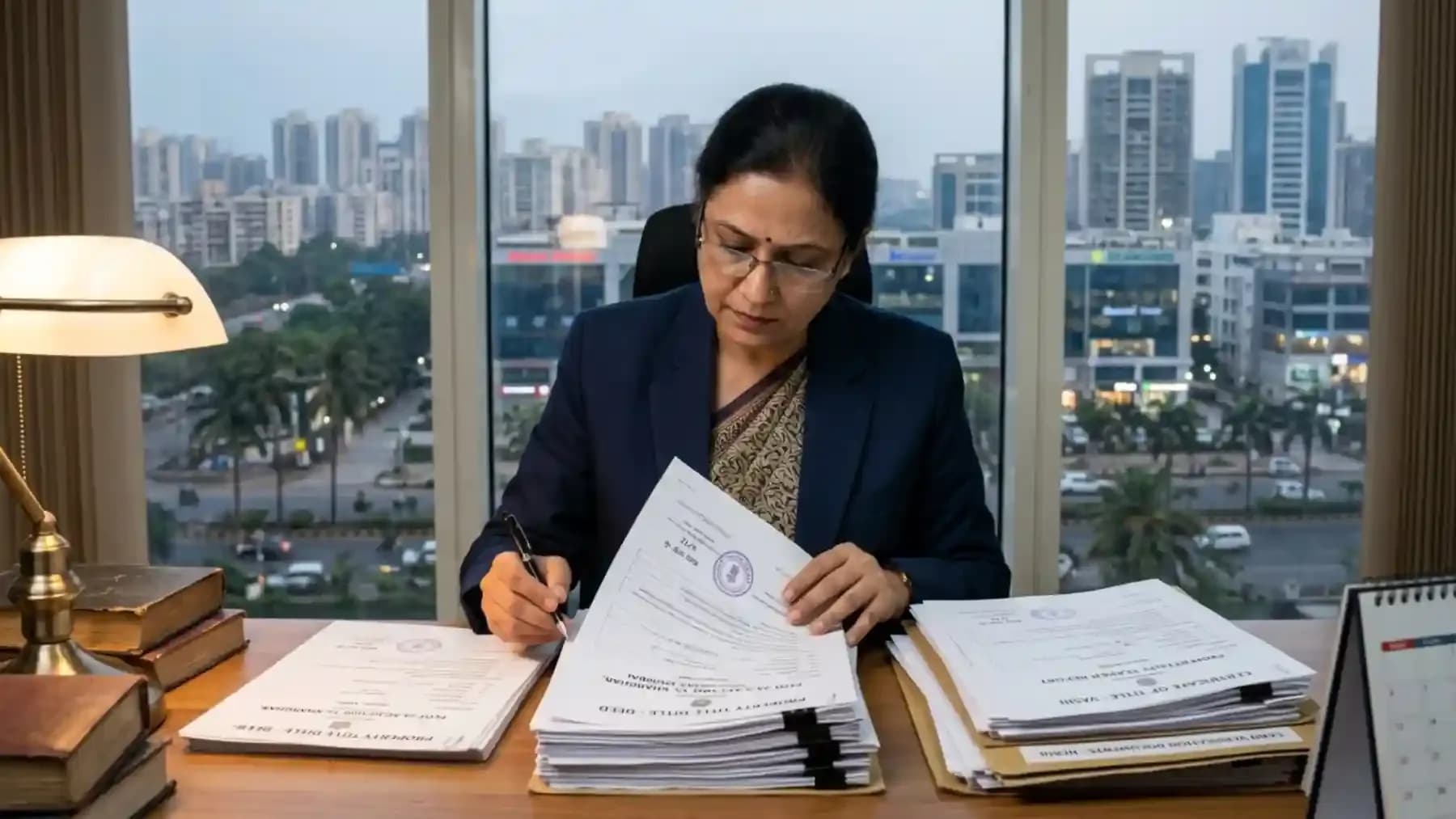
- Ownership follows the title: there is no automatic 50:50 split.
- A flat in joint names is divided by agreement, buyout or partition.
- Stridhan belongs to the wife absolutely and must be returned.
- A wife can claim a right to reside in the shared household under the DV Act.
On this page
- Does a wife get a share in her husband's property after divorce?
- Who keeps the flat in each situation?
- What happens to a flat in joint names?
- Can a wife stay in the flat if it is not in her name?
- What happens to stridhan and wedding gifts?
- How is a co-operative society flat transferred after divorce?
- Can a spouse sell or mortgage the flat while the divorce is pending?
- What about an under-construction flat or one paid for by parents?
- What happens to the joint home loan?
- How should the flat be written into consent terms?
- Settle the flat on paper before you sign
Does a wife get a share in her husband's property after divorce?
Not automatically. Indian law has no community property regime, so a divorce does not by itself give either spouse a share in property owned by the other. What the wife does get is a set of claims that often matter more in practice:
- maintenance and permanent alimony, which the court can secure on the husband's property;
- her stridhan and any property in her own name, which remain hers;
- a share of property held jointly or bought with her money;
- a right to reside in the shared household while protection under the Domestic Violence Act applies.
Section 25 of the Hindu Marriage Act lets the court make permanent alimony a charge on the husband's immovable property. Our guide on how alimony is calculated explains how that award is worked out.
Who keeps the flat in each situation?
| Situation | Who owns it | What the other spouse can do |
|---|---|---|
| Flat in husband's sole name, paid by him | Husband | Claim alimony, residence rights and seek security over the flat |
| Flat in husband's name, wife paid part of the price or EMIs | Husband on paper | Claim her contribution, supported by bank records |
| Flat in joint names | Both, in the shares stated or equally | Agree a buyout or sale, or seek partition |
| Flat in wife's sole name | Wife | Husband may claim his contribution if he paid |
| Flat owned by in-laws | In-laws | Wife may claim residence in the shared household under the DV Act |
Contribution claims stand or fall on paper. Bank statements showing the down payment or EMIs leaving your account are far more persuasive than recollections years later.
What happens to a flat in joint names?
Joint owners stay joint owners after the decree until they agree otherwise. The usual options are:
- a buyout, where one spouse pays the other for their share and takes over the loan;
- a sale, with the loan cleared and the balance divided;
- if there is no agreement, a partition suit in the civil court.
Section 27 of the Hindu Marriage Act also lets the divorce court make provisions about property presented at or about the time of the marriage that belongs jointly to both spouses. In a buyout, the transfer of the share should be done by a registered document, with stamp duty paid. Simply writing in the consent terms that the flat goes to one spouse is not enough to change the title.
Can a wife stay in the flat if it is not in her name?
Often, yes, for as long as the law protects her. Section 17 of the Protection of Women from Domestic Violence Act, 2005 gives a woman in a domestic relationship the right to reside in the shared household whether or not she has any title in it, and Section 19 lets the magistrate pass residence orders. In Satish Chander Ahuja v Sneha Ahuja (October 2020), the Supreme Court held that a shared household can include a home owned by the husband's relatives, though the right is not absolute and courts balance it against the owners' rights. The judgment is on the Supreme Court's website.
Once the divorce is final, the residence right is usually settled through the consent terms or replaced by alimony that covers housing. If you need to protect your position quickly, you can contact us to discuss interim relief.
What happens to stridhan and wedding gifts?
Stridhan is the jewellery, cash, gifts and property given to a woman before, at or after her marriage. It belongs to her absolutely. In Pratibha Rani v Suraj Kumar (1985), the Supreme Court held that a husband or in-laws who hold her stridhan do so only as trustees and must return it on demand. Section 14 of the Hindu Succession Act also makes property held by a Hindu woman her absolute property. The Acts are available on India Code.
- List items with photographs, bills and the names of who gave them.
- Ask for return in writing before the case begins.
- Write the return of specific items, with a date, into the consent terms.
How is a co-operative society flat transferred after divorce?
Most Mumbai flats sit in housing societies registered under the Maharashtra Co-operative Societies Act, 1960. The society holds the land and building, and each member holds shares along with the right to occupy the flat. After a divorce settlement, the outgoing spouse's share and interest has to be transferred in the society's records. That needs an application to the society under its bye-laws, the registered transfer document, the transfer fee and the existing share certificate.
Being a nominee in the society's records does not make a person the owner. If the society delays or refuses a transfer without reason, the remedy lies before the co-operative authorities. Our guide to housing society disputes explains that process, and our property team in Mumbai handles the transfer paperwork.
Can a spouse sell or mortgage the flat while the divorce is pending?
The owner on paper can legally deal with the flat until a court says otherwise, which is why timing matters. A spouse who fears a sale, a fresh loan or a gift to relatives can ask the court for an injunction restraining any transfer while the case is pending. Under the Domestic Violence Act, Section 19 also allows the magistrate to restrain the husband from alienating or disposing of the shared household.
- Ask for the restraint early, before any buyer or lender is involved.
- Inform the housing society in writing that the flat is the subject of a pending case.
- Keep copies of the agreement for sale, share certificate and loan sanction letter.
Courts weigh such requests against the owner's rights, so the application should show a real risk, such as the flat being listed for sale or a sudden attempt to raise money against it.
What about an under-construction flat or one paid for by parents?
An under-construction flat is usually held through an agreement for sale with the builder, not yet a completed title. The rights under that agreement belong to whoever signed it, and if both spouses signed, both hold them. Transferring one spouse's rights generally needs the builder's consent and, once the flat is complete, a registered document. Payment receipts and bank records again decide who contributed what.
Where parents on either side paid for the flat, the documents still decide ownership. If the flat was bought in the son's name with his parents' money, it belongs to him unless the paperwork shows otherwise, and the wife's claims lie in alimony and residence rather than ownership. Gifts given to the wife herself, including money from her parents towards the flat, may be part of her stridhan if the evidence supports it.
What happens to the joint home loan?
The bank is not a party to the divorce. If both spouses signed the loan as co-borrowers, both stay liable for the full amount until the bank formally releases one of them, whatever the consent terms say. A spouse who keeps the flat usually has to refinance the loan in their own name or get the bank's written consent to remove the other borrower, and the bank will assess whether that spouse's income alone supports the EMI.
- Check the outstanding balance and prepayment terms before agreeing a buyout price.
- Agree who pays the EMIs between separation and the decree.
- Make the release from the loan a condition before the second motion in a mutual consent divorce.
- Ask the bank for the original title documents it holds to be dealt with in the same step.
How should the flat be written into consent terms?
Vague terms about the flat are a common reason settled divorces return to court. Good terms name:
- the flat, its society and the shares each spouse holds;
- the buyout price and the dates it is paid;
- who keeps the society membership and who signs the transfer;
- who pays the loan, and until when;
- the date of moving out, and what happens to furniture and deposits.
Tie each step to a stage of the case. Many couples link the first instalment to the first motion and the transfer and final payment to the second motion. For the overall process, our guide on divorce under Hindu law explains mutual consent and contested routes, and the page on Navi Mumbai divorce cases covers CIDCO flats there.
Settle the flat on paper before you sign
A flat is usually the largest asset in a Mumbai marriage, and the cost of getting the paperwork wrong falls on whoever keeps it. Settle ownership, the loan and the society transfer in writing before the decree, not after. If children live in the flat, their needs should shape the plan, as our custody guide explains.
Deciding What Happens to the Flat?
VIVS Legal helps spouses work out buyouts, society transfers, loan releases and stridhan return, and writes them into consent terms the family court will accept. Bring the flat papers and loan statement to your first meeting.
Book a ConsultationSpeak to a divorce advocate in Mumbai at our firm before signing anything. Learn more about VIVS Legal, our practice since 2010.

Founder and Managing Partner, VIVS Legal. BLS, LL.B, LL.M, PGDBM, JAIIB.